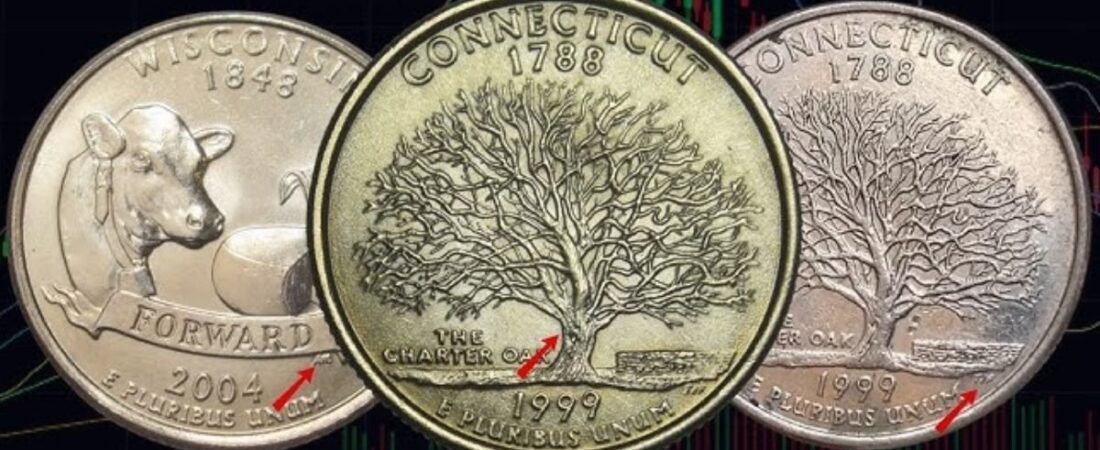
The 50 State Quarters program, launched by the United States Mint in 1999, sparked widespread interest in coin collecting across the country. While billions of these quarters entered circulation and most still carry just their face value of 25 cents, certain rare examples—especially those with striking minting errors or exceptional preservation—have climbed to extraordinary values. In 2026, collectors continue to hunt for these hidden gems, some fetching prices in the thousands or even pushing into six-figure territory at auctions when the right conditions align. Here are the top 10 most sought-after state quarters that serious buyers are chasing right now.
The Allure of Minting Mistakes
What turns an ordinary quarter into a potential fortune often comes down to imperfections during production. Errors like doubled dies, extra elements, or unusual strikes create varieties that stand out dramatically from the standard design. These flaws are unintentional, making them scarce and highly desirable. Collectors prize them because no two are exactly alike, and high-grade examples in pristine condition command the highest prices.
Iconic Error Varieties Leading the Pack
Several state quarters have gained legendary status thanks to well-known errors that appeared during minting. These stand out as perennial favorites in the hobby.
- The 2004-D Wisconsin Extra Leaf quarter features an unexpected additional leaf on the corn stalk, with high-leaf and low-leaf varieties driving demand.
- The 1999-P Delaware Spitting Horse shows a die break that makes it appear as if the horse is spitting, creating a quirky visual anomaly.
- The 2005-P Minnesota Doubled Die quarter reveals extra trees or partial outlines in the state landscape due to doubled impressions.
- The 1999-P Connecticut Broadstruck error results in a wider-than-normal coin from an off-center strike or planchet issue.
These error coins frequently top collector wish lists because of their eye-catching nature and relative ease of spotting with careful examination.
Proof and Low-Mintage Standouts
Beyond errors, certain proof versions struck at the San Francisco Mint or coins from lower-production runs draw intense interest. Perfectly preserved examples in top grades often set new auction records. The 1999-S Delaware proof quarter, for instance, benefits from its status as the first in the series and sharp details that hold up under scrutiny. Similarly, pristine 2000 South Carolina or 2008-D Alaska quarters in near-perfect condition have surprised sellers with strong returns when graded highly.
Why Values Keep Rising in 2026
The state quarters program wrapped up years ago, but nostalgia and ongoing discoveries keep the market active. As more people dig through old jars, rolls, or inherited collections, fresh examples surface. Advanced grading services highlight subtle differences in condition, pushing elite pieces higher. Demand from both longtime numismatists and newer enthusiasts fuels competition, especially for coins that combine historical significance with visual drama. In a hobby where rarity meets storytelling, these quarters deliver on both fronts.
Tips for Checking Your Own Coins
Start by examining quarters from 1999 through 2008 closely under good light. Look for anything unusual in the design elements, such as extra lines, doubled lettering, or odd shapes. Pay special attention to the state outlines, trees, animals, or other central features where errors tend to appear. Even circulated examples can hold value if the flaw is clear, though uncirculated or professionally graded coins bring the biggest rewards. If something catches your eye, consider having it evaluated by a reputable grading service to confirm authenticity and condition.
The state quarters era may be over, but its legacy lives on through these remarkable pieces. What began as a fun way to learn about the fifty states has evolved into a serious collecting pursuit where a single 25-cent coin can represent life-changing money for the lucky finder. Keep an eye on your change—you never know when one of these sought-after treasures might turn up in your pocket.
FAQs
What makes a state quarter worth millions instead of just 25 cents?
Exceptional mint errors, extreme rarity in high grades, or unique varieties can drive values dramatically higher through collector competition and auction bidding.
Are any regular state quarters without errors worth a lot?
Most standard circulation strikes remain near face value, but pristine proof versions or very low-mintage business strikes from certain years can reach thousands in top condition.
How can I tell if my state quarter has a valuable error?
Compare it to standard images of the coin online and look for extra elements, doubling, or unusual shapes. Common spots include leaves on Wisconsin, horse details on Delaware, or trees on Minnesota.
Should I clean a potentially valuable state quarter?
Never clean coins you suspect might be rare—cleaning can destroy value. Leave them as found and seek professional advice.
Where do these high-value state quarters usually sell?
They appear at major coin auctions, through certified dealers, or online marketplaces where graded examples attract serious buyers.