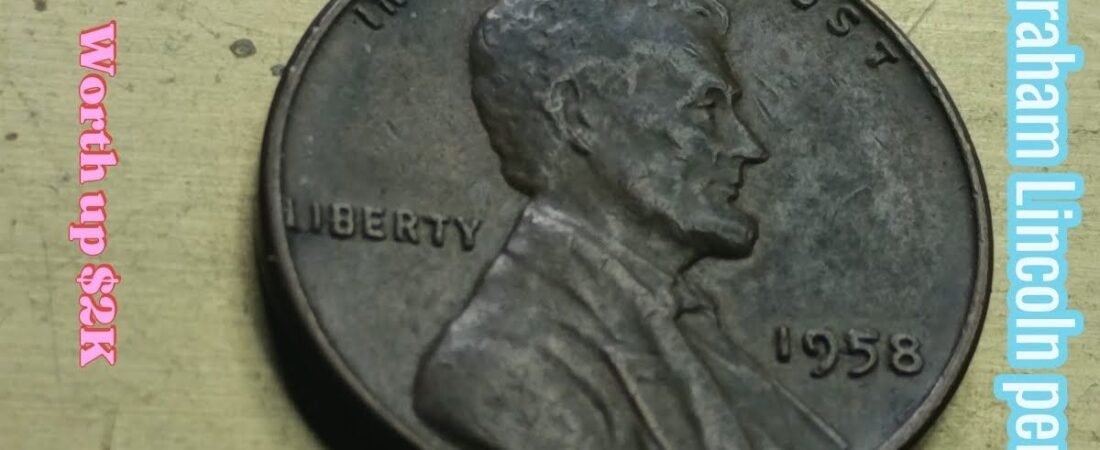
The 1958 Lincoln wheat penny marked the end of an era for one of America’s most beloved coins. While most examples from that year are common and worth little more than face value, a rare minting mistake has turned some into true treasures. Collectors and everyday people alike are digging through old jars and pocket change, hoping to spot this valuable error that could change their fortunes overnight.
The Final Year of the Wheat Design
In 1958, the U.S. Mint produced Lincoln cents with the classic wheat stalks on the reverse for the last time. The following year brought the new Lincoln Memorial design. This transition made the 1958 pennies special to begin with, as collectors sought them to complete wheat reverse sets. Regular circulated examples fetch only a few cents, but high-grade uncirculated pieces can reach hundreds or even thousands depending on their condition and color.
What really drives excitement, though, is the discovery of striking errors from the minting process. These imperfections, created during production, turn ordinary coins into sought-after rarities.
Understanding the Doubled Die Obverse Error
The standout error for 1958 wheat pennies involves a doubled die obverse. This happens when the die that stamps the coin’s front side receives an extra impression that’s slightly off-center during preparation. The result shows noticeable doubling in key letters and details.
On affected 1958 pennies, look for clear doubling in the motto “IN GOD WE TRUST” and the word “LIBERTY.” The date may show milder doubling as well. This dramatic effect stands out even to the untrained eye, making it easier to spot than subtler varieties.
Only a handful of these error coins are known to exist, which explains their extraordinary value in the numismatic world.
Why This Error Commands Such High Prices
Rarity drives the market for error coins, and the 1958 doubled die obverse ranks among the scarcest in the Lincoln series. With so few examples available, competition among serious collectors pushes prices upward whenever one appears at auction.
Top specimens have achieved remarkable results in recent sales, highlighting how condition plays a huge role. The finest pieces, graded in gem condition with full original red luster, represent the pinnacle for buyers.
Even coins in slightly lower grades still bring strong returns compared to standard 1958 pennies.
How to Check Your Own 1958 Pennies
Grab a magnifying glass or use your phone’s zoom feature to examine any 1958 wheat pennies you come across. Focus on the obverse side first.
- Strong doubling on “IN GOD WE TRUST,” especially the letters in “GOD” and “TRUST”
- Noticeable doubling on “LIBERTY,” particularly the upper parts of the letters
- Slight separation or thickness in the digits of the date “1958”
- Overall sharpness in the doubling that looks intentional rather than wear or damage
If the doubling appears crisp and consistent across multiple letters, it could indicate the genuine error rather than common machine doubling or post-mint damage.
What to Do If You Think You’ve Found One
Discovering a potential doubled die 1958 wheat penny calls for careful handling. Avoid cleaning the coin, as that can reduce its value dramatically. Store it safely in a protective holder or flip.
Next, consider professional grading from services like PCGS or NGC to confirm authenticity and condition. These third-party assessments provide certification that boosts buyer confidence and often increases the final price.
Many collectors have turned modest finds into significant payouts by taking this route.
In the end, the 1958 wheat penny serves as a reminder that history and hidden value can still lurk in everyday places. While the odds remain slim, one quick check of your change or old coin jars might reveal something extraordinary. Keep an eye out—the next million-dollar penny could be waiting in your pocket.
FAQs
What makes the 1958 wheat penny error so special?
It features a rare doubled die obverse mistake with strong doubling on key inscriptions, and only a very small number are known to exist.
How much can a 1958 doubled die wheat penny be worth?
Top examples have sold for well over a million dollars, while others in excellent condition have brought hundreds of thousands at auction.
Are there other errors on 1958 wheat pennies that add value?
Yes, some show clipped planchets, repunched mint marks, or other minor varieties, but none match the doubled die’s rarity or price potential.
How can I tell if my 1958 penny has machine doubling instead of the real error?
Machine doubling often looks blurry, inconsistent, or shelf-like, while the genuine doubled die shows sharp, separated doubling across specific letters.
Should I clean a 1958 wheat penny if I suspect it’s valuable?
No—cleaning removes natural toning and luster, which can lower the coin’s grade and value significantly. Leave it untouched.