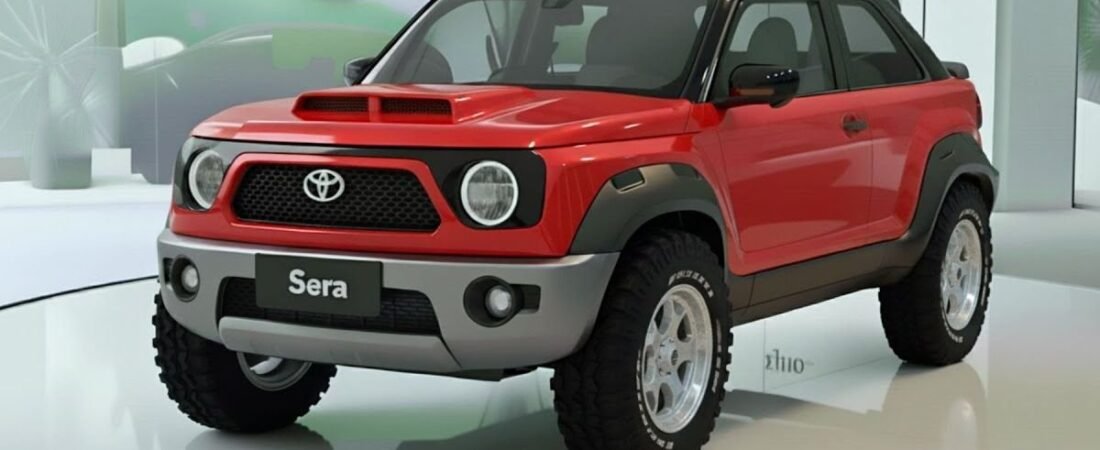
The Toyota Sera has long held a special place in automotive history as a quirky, glass-domed coupe from the early 1990s, famous for its butterfly doors and futuristic vibe. Now, fresh buzz surrounds a possible 2026 revival that flips the script entirely, turning this urban oddity into something far more rugged. The Sera Mini Off-Road Concept imagines the classic design reborn as a compact, trail-capable machine ready to tackle light adventures while keeping its signature charm.
Reviving a Cult Classic
The original Sera hit the scene in 1990 as a Japan-only model, blending affordable parts with bold styling that even influenced icons like the McLaren F1’s doors. Its massive glass canopy and upward-swinging doors gave it an otherworldly look, perfect for city streets but never meant for dirt. Decades later, the idea of bringing it back taps into nostalgia for 90s Japanese designs while addressing today’s demand for versatile small vehicles. This concept keeps the Sera’s compact size and playful personality but adds serious upgrades to make it more than just a conversation starter.
Key Design Changes for Off-Road Duty
To shift from pavement to paths, the concept raises the ride height noticeably, giving it better ground clearance for uneven terrain. Rugged body cladding protects the sides and wheel arches from scrapes, while wider fenders accommodate chunkier tires built for grip on loose surfaces. The butterfly doors remain a highlight, now paired with a tougher stance that makes the whole package look purposeful rather than delicate.
- Elevated suspension for improved approach and departure angles
- Reinforced underbody shielding to handle rough trails
- All-terrain tires with aggressive tread patterns
- Protective skid plates for added durability
These modifications transform the Sera into a micro-SUV that still fits easily in tight urban spots.
Powertrain and Performance Outlook
Modern expectations point toward electrification in any new Toyota concept, and this one appears no different. A hybrid setup or even full electric drivetrain would suit the small footprint perfectly, delivering efficient power with instant torque ideal for crawling over obstacles. All-wheel drive seems likely to replace the original front-wheel layout, ensuring better traction when things get slippery. The focus stays on light off-road fun rather than extreme rock crawling, making it approachable for weekend explorers who also need something nimble in daily traffic.
Why This Concept Makes Sense Today
Small, adventurous vehicles are gaining traction as people look for alternatives to bulky SUVs. A Sera Mini Off-Road would appeal to those wanting style and capability without excess size or fuel thirst. Its retro roots add character in a sea of similar crossovers, while the compact dimensions suit crowded cities and narrow trails alike. Toyota has a track record of playful concepts that influence production models, so this could hint at broader trends toward fun, efficient adventure rigs.
Potential Challenges Ahead
Not everything translates smoothly from idea to reality. The original Sera’s glass-heavy design might need reinforcement for off-road durability without losing its airy feel. Balancing weight, aerodynamics, and rugged features in such a small package presents engineering hurdles. Market demand remains uncertain outside enthusiast circles, especially if pricing climbs too high for what is essentially a niche revival.
In the end, the 2026 Toyota Sera Mini Off-Road Concept sparks imagination by taking a beloved oddball and giving it new purpose. Whether it stays a fan-inspired vision or evolves into something Toyota builds, it shows how classic designs can adapt to fresh demands for adventure and individuality. For now, it stands as an exciting what-if that blends yesterday’s whimsy with tomorrow’s trails.